


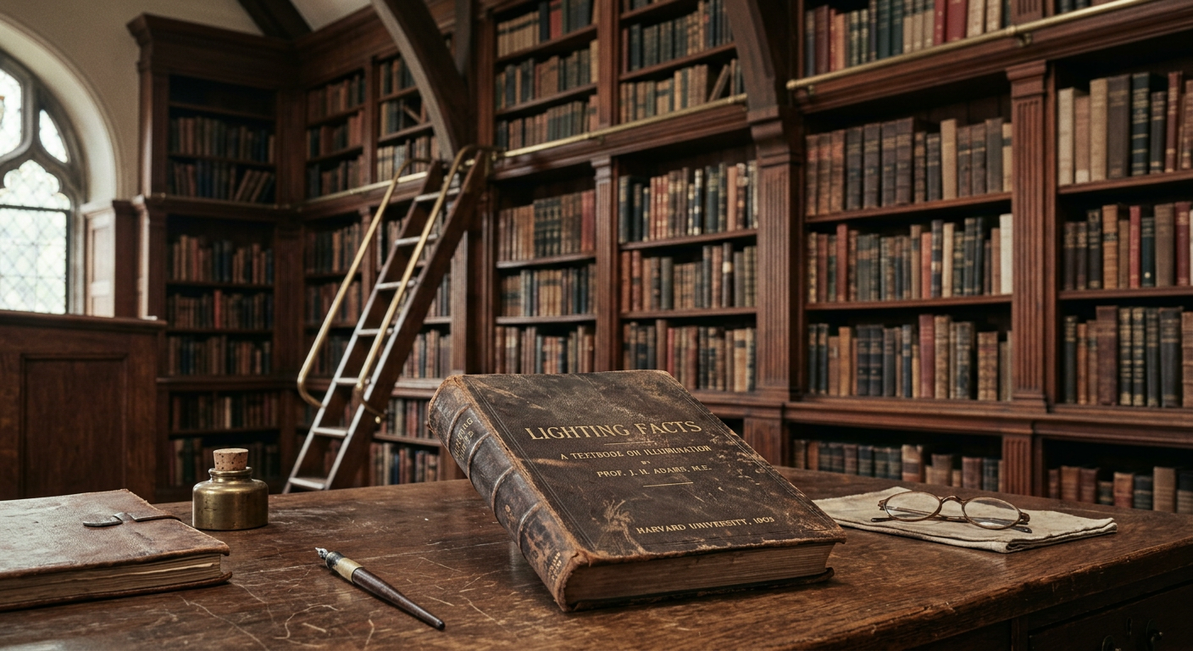
25 Lighting Facts for Curious Minds
1. What is light?
Answer: Light is a form of energy that allows us to see objects around us. It travels in waves and can come from natural sources like the sun or artificial sources like light bulbs.
2. Why do we need lighting?
Answer: Lighting helps us see clearly, work safely, improve security, and create comfortable environments in homes, schools, businesses, and outdoor areas.
3. What is an LED light?
Answer: LED stands for Light Emitting Diode. LEDs produce light using electricity and semiconductor technology. They use less energy and last much longer than traditional bulbs.
4. Why are LED lights more efficient?
Answer: LEDs convert most of their energy into light rather than heat. This means they use less electricity while producing the same amount of brightness.
5. What is a lumen?
Answer: A lumen is a measurement of how much visible light a fixture or bulb produces. The higher the lumen rating, the brighter the light.
6. What is a watt?
Answer: A watt measures how much electrical power a light uses. Modern LED lights can produce the same brightness as older bulbs while using far fewer watts.
7. What is color temperature?
Answer: Color temperature describes the appearance of light and is measured in Kelvin (K). Lower numbers create warm yellow light, while higher numbers create cool white or bluish light.
8. What does 3000K mean?
Answer: A 3000K light produces a warm white color that feels comfortable and inviting. It is commonly used in homes, restaurants, and hospitality settings.
9. What does 5000K mean?
Answer: A 5000K light produces a bright daylight-like white color. It is often used in warehouses, parking lots, workshops, and commercial buildings.
10. How long do LED lights last?
Answer: Many LED lights last between 25,000 and 100,000 hours depending on the product and operating conditions.
11. What is solar lighting?
Answer: Solar lighting uses energy from the sun to charge batteries during the day and provide light at night without needing electrical wiring.
12. Why is solar lighting becoming more popular?
Answer: Solar lighting reduces electricity costs, requires less infrastructure, and can be installed in locations where electrical power is difficult to access.
13. What is a photocell?
Answer: A photocell is a sensor that automatically turns lights on at dusk and off at dawn by detecting ambient light levels.
14. What is a motion sensor light?
Answer: A motion sensor light turns on when movement is detected nearby. These lights improve security and save energy.
15. Why do parking lots need lighting?
Answer: Parking lot lighting helps drivers and pedestrians see clearly, improves security, reduces accidents, and makes people feel safer.
16. What is light pollution?
Answer: Light pollution is excessive or poorly directed artificial light that brightens the night sky and can interfere with wildlife, astronomy, and human health.
17. What is Dark Sky lighting?
Answer: Dark Sky lighting is designed to reduce light pollution by directing light downward where it is needed and minimizing glare and sky glow.
18. How does lighting affect safety?
Answer: Proper lighting helps people identify hazards, navigate safely, and avoid accidents in workplaces, schools, roads, and public spaces.
19. Why are some lights amber instead of white?
Answer: Amber lights produce less blue light, which can reduce glare, decrease light pollution, and be less disruptive to wildlife.
20. What is turtle-friendly lighting?
Answer: Turtle-friendly lighting uses amber wavelengths that are less likely to confuse sea turtles, helping protect nesting and hatchling populations near coastlines.
21. What is a floodlight?
Answer: A floodlight is a powerful fixture designed to illuminate large outdoor areas such as sports fields, parking lots, building exteriors, and parks.
22. What is a street light?
Answer: A street light is a fixture installed along roads and sidewalks to improve visibility and safety for drivers, cyclists, and pedestrians.
23. How can better lighting save money?
Answer: Energy-efficient lighting uses less electricity and requires less maintenance, reducing utility bills and replacement costs over time.
24. What is smart lighting?
Answer: Smart lighting can be controlled remotely through sensors, timers, or mobile devices, allowing users to adjust brightness and schedules automatically.
25. What does the future of lighting look like?
Answer: The future of lighting includes more efficient LEDs, solar-powered systems, smart controls, connected sensors, and designs that improve energy savings while reducing environmental impact.
Recent Posts
-
Why Induction Lighting Is Still the Best Choice for Commercial, Industrial, and Municipal Lighting
TL;DR: Induction lighting remains one of the strongest choices for commercial, industrial, and munic …Aug 21st 2026 -
Commercial Solar LED Lighting: The Complete Guide to Converting Your Property
Commercial Solar LED Lighting: The Complete Guide to Converting Your Property As energy prices conti …Aug 7th 2026 -
Commercial LED Lighting vs. Halogen, Metal Halide, and High-Pressure Sodium Lighting
Lighting technology has evolved dramatically over the past century, improving efficiency, reducing …Jun 12th 2026