


Commercial LED Lighting vs. Halogen, Metal Halide, and High-Pressure Sodium Lighting
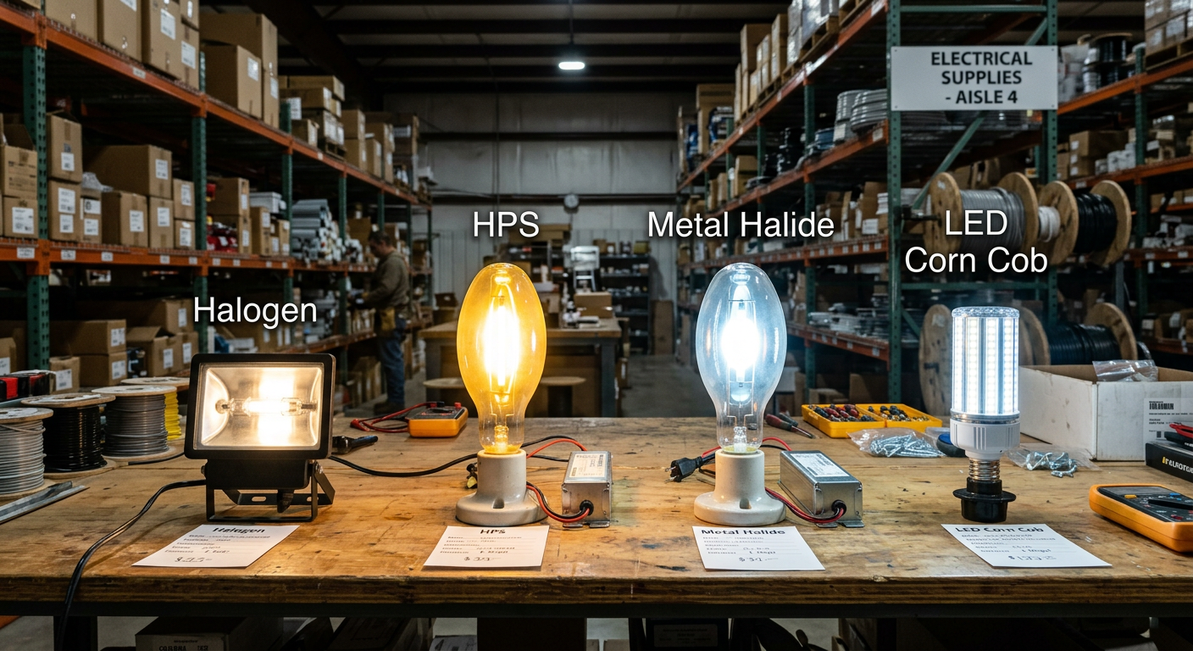
Lighting technology has evolved dramatically over the past century, improving efficiency, reducing maintenance costs, and helping businesses lower their energy consumption. While halogen, metal halide, and high-pressure sodium (HPS) lighting once dominated commercial and industrial applications, modern LED lighting has become the preferred solution for facilities seeking maximum efficiency and longevity. Understanding how these technologies originated, how they work, and how they compare can help facility managers make informed lighting decisions.
Halogen Lighting
Halogen lighting was developed in the 1950s as an improvement over traditional incandescent lamps. Halogen bulbs work by passing electricity through a tungsten filament enclosed in a small quartz capsule filled with halogen gas. The halogen gas helps recycle evaporated tungsten back onto the filament, extending lamp life compared to standard incandescent bulbs.
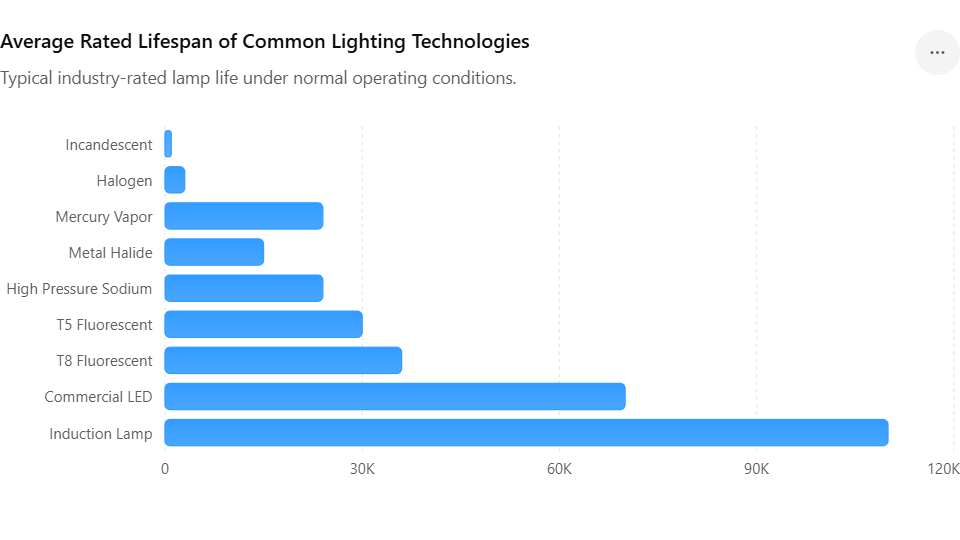
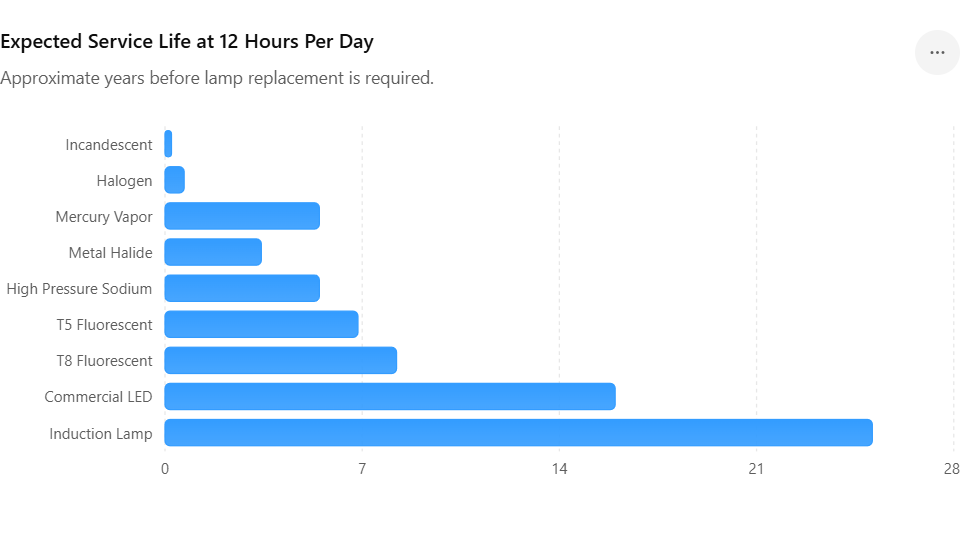
While halogen lamps provide excellent color rendering and instant-on operation, they are highly inefficient. Most of the energy consumed is converted into heat rather than visible light. Typical halogen lamps produce approximately 15-25 lumens per watt and have a lifespan of only 2,000 to 4,000 hours.
Metal Halide Lighting
Metal halide technology was introduced commercially in the 1960s and quickly became popular for warehouses, manufacturing facilities, gymnasiums, and parking lots. These lamps work by creating an electrical arc through a mixture of mercury vapor and metal halide compounds inside a quartz or ceramic arc tube.
Metal halide fixtures produce bright white light and generally achieve efficiencies of 65-115 lumens per watt. However, they require warm-up time, experience significant lumen depreciation over their lifespan, and typically last between 10,000 and 20,000 hours. Maintenance costs can become substantial in facilities with high mounting heights or difficult access.
High-Pressure Sodium (HPS) Lighting
High-pressure sodium lighting emerged in the late 1960s and became a popular choice for roadway, parking lot, and outdoor area lighting. HPS lamps generate light by creating an electrical arc through vaporized sodium and mercury within a ceramic arc tube.
One of the primary advantages of HPS lighting is its efficiency, typically producing 80-150 lumens per watt. However, the technology produces a distinctive yellow-orange light with poor color rendering, making it difficult to distinguish colors accurately. HPS lamps generally last 16,000 to 30,000 hours but require ballasts, periodic maintenance, and replacement as lumen output gradually declines.
LED Lighting: The Modern Standard
Light Emitting Diode (LED) technology originated in the 1960s, but major advancements over the past two decades have transformed LEDs into the leading commercial lighting solution. LEDs produce light through electroluminescence, where electricity passes through a semiconductor material and directly generates visible light.
Unlike traditional lighting technologies, LEDs convert a much larger percentage of energy into usable light rather than heat. Modern commercial LED fixtures routinely achieve efficiencies of 130-200+ lumens per watt while maintaining excellent color quality and instant-on performance. Many commercial LED systems are rated for 50,000 to 100,000 hours of operation, dramatically reducing maintenance requirements and replacement costs.
Why Businesses Are Switching to LED
Compared to halogen, metal halide, and HPS technologies, LED lighting offers the best combination of energy efficiency, longevity, reliability, and overall operating cost savings. Facilities upgrading to LED lighting often experience energy reductions of 50% or more while benefiting from longer service life, reduced maintenance expenses, improved visibility, and enhanced workplace safety. As energy costs continue to rise, LED lighting remains one of the most effective investments commercial and industrial facilities can make to improve efficiency and reduce operating expenses.
If you're currently operating metal halide, HPS, or aging fluorescent lighting systems, now is the perfect time to upgrade. Our LED Corn Lamps provide a simple retrofit solution that can reduce energy consumption by up to 75%, dramatically decrease maintenance expenses, and deliver years of reliable performance. With a wide range of wattages, voltage options, and light outputs available, there's an LED corn lamp designed to meet your facility's needs. Browse our LED Corn Lamp collection today and discover how easy it is to improve lighting performance while lowering operating costs.
Recent Posts
-
Why Induction Lighting Is Still the Best Choice for Commercial, Industrial, and Municipal Lighting
TL;DR: Induction lighting remains one of the strongest choices for commercial, industrial, and munic …Aug 21st 2026 -
Commercial Solar LED Lighting: The Complete Guide to Converting Your Property
Commercial Solar LED Lighting: The Complete Guide to Converting Your Property As energy prices conti …Aug 7th 2026 -
Commercial LED Lighting vs. Halogen, Metal Halide, and High-Pressure Sodium Lighting
Lighting technology has evolved dramatically over the past century, improving efficiency, reducing …Jun 12th 2026